


WATER INFRASTRUCTURE
PROJECTS
1. Our Solution for
Centralized Public Water Infrastructure:
The Modular Technology Concept
Proven technologies, replicable and scalable structure - derisked for private investors,
for the largest water projects in the world
Grasshopper Investments and its project development subsidiary “Intelligent Water Solutions” (www.inwasol.com), together with partners from the German water industry and academia, have developed a modular technology concept that makes investments in centralized drinking water infrastructure - particularly water treatment plants and pumping stations—accessible to private capital providers.
The concept focuses exclusively on technologies for drinking water supply. These technologies are specifically integrated into large projects of public water infrastructure - both in the context of new construction projects and the modernization of existing facilities. All construction works are excluded. As a result, central risk factors such as long construction times, incalculable construction costs, and decades-long capital tie-up are eliminated.
Based on this modular technology concept, numerous projects have already been implemented, which have steadily grown in size over the years. Project sizes have now reached a capacity of around 1,300 MLD, which corresponds to 1,300 times 1 million liters of drinking water—and that per day. From a magnitude of 1,000 MLD, one enters the realm of the world’s largest water infrastructure facilities. Surpassing the 1,000 MLD mark represented a decisive milestone - because only successful reference projects of this scale open the door to international mega-projects in water infrastructure.
This success is the result of 17 years of targeted groundwork. In public water supply, not only technological know-how or innovation counts, but above all the proven successful use of technologies over longer operating periods as well as reliable references in comparable size categories. Grasshopper’s modular technology concept now meets precisely these requirements and thus enables access to large-scale water infrastructure projects worldwide.
The video shows examples of our projects in public water supply (as "technology-only projects" for drinking water treatment), with water treatment capacities up to 1300 MLD.
These projects, implemented by the public water supplier of Oman, won the prestigious "Asian Water Award" for "Sustainability in Water Infrastructure" in 2025.


The modular, standardized and scalable technology concept - derisked
Our modular "technologies only" concept for projects in central public water infrastructure is based on a standardized model: a technological system for drinking water treatment has been developed in a modular way so that it can be flexibly configured for facilities between 1 and more than 1,000 MLD and get integrated into existing or new infrastructures.
The basic principle always remains the same - from the quality technologies used by European manufacturers to planning, installation, and maintenance, up to optional operations management. Only the size and capacity of the facilities vary from project to project.
This standardization enables efficient serial implementation for large and smaller drinking water networks - for example, within the framework of state programs, urban infrastructure initiatives, or public-private operator concepts. The repeatable and by now proven project process is not only cost- and time-efficient, but also transferable to many countries for further scaling.
The concept removes all construction risks and long-term capital lock-ups, making it de-risked for private investors.
Today, our water projects range from approx. 0.5 to over 1,000 MLD in capacity.
The examples below show what these figures mean in practice: for people, projects, water infrastructure capacities, treatement plants, hospitals, buildings, agriculture and entire cities.
Our Project Sizes and Project Categories
Understanding Water Projects, Treatment Plant Capacities and Water Supply Volumes
Grasshopper water projects range from ca 0.5 MLD to more than 1000 MLD MLD means: Million Liters per Day and describes the capacity of a water treatment plant / the size and capacity of water infrastructure /or a daily water consumption. 0.5 MLD - are 500 thousand liters of water per day → decentralized water projects or bigger private-sector projects = 500,000 liters/day = 500 m³/day ≈ 1.000 people (at 100 liters per person per day / in piped water supply), excluded any industry water supply ≈ 125,000 people (for 4 liters of drinking water / person/ per day) in rural areas and decentral projects. 1 MLD - is 1 million liters of water per day → small water infrastructure projects or large private-sector projects = 1,000,000 liters/day = 1,000 m³/day ≈ 10,000 people (at 100 liters per person per day / in piped water supply), excluded any industry water supply = 365 million liters or 365,000 m³ / per year 10 MLD - are 10 million liters of water per day → midsize water infrastructure projects = 10,000,000 liters/day = 10,000 m³/day ≈ 100,000 people (at 100 liters per person per day / in piped water supply), excluded any industry water supply = 3,650 million liters - or 3.65 million m³ / per year 100 MLD - are 100 million liters of water per day → large water infrastructure projects ≈ 1,000,000 people (at 100 liters per person per day / in piped water supply), excluded any industry water supply = 36,500 million liters – or 36.5 million m³ / per year 1,000 MLD - are 1,000 x 1 million liters of water - per day → very large and largest water infrastructure projects ≈ 10,000,000 people (at 100 liters per person per day / in piped water supply), excluded any industry water supply = 365 million m³ / per year A human needs approx. 4 liters of drinking water per day - to survive. A minimum water supply of 50 - 100 liters per person per day is needed, according to UN / WHO, for all basical needs (drinking, showering, cooking, washing, toilet), not included here: the virtual water footprint. A country like Germany and many other European Countries have an average water consumption of approx. 120 liters per person per day (Taiwan ~270 liters, USA ~300-400 liters, Dubai ~500 liters), not included here: the virtual water footprint. A household with a family with 2 kids needs between 200 - 1000 liters of Water per day (depending on the world region). A housing society with 100 family flats needs 20,000 - 100,000 liters per day (or 0.1 MLD) (depending on the world region). A bungalow society in Asia with 50 bungalows and rooftop water tanks, supplied by water tankers, needs 50 dosing stations and a local production plant with a treatment capacity of approx 50 m³ per day, plus an MWDS operation concept. A hospital needs between 200 - 1,200 liters of water / per bed / per day (depending on the hospital and world region). A hospital with 300 beds (and 500 liters per bed per day) needs water treatment for 150 k liters per day (or 0.15 MLD) A hospital project with 20 hospitals with 300 beds each (and 500 liters per bed per day) needs a minimum of 20 separate water treatment plants (depending on site conditions), with a total capacity of 3 MLD. A cow drinks between 50 - 150 liters of water per day (depending on the cattle breed, environment and temperature). A normal milk-producing cow drinks between 3-5 liters of water - for each liter of milk produced. A production of 1 kg beef requires roughly 15,000 liters of water on average (full virtual water footprint). A city like Hamburg has an average water consumption of approx. 300 MLD (for drinking water and industrial water supply). A city like Munich has an average water consumption of 300-350 MLD (for drinking water and industrial water supply). A megacity like Mumbai, with approx. 20 million inhabitants, has an overall capacity for piped water (including all single waterworks and pumping stations in a network supplied from several dams) of approx. 3,000 MLD.
Over many years, we have built a strong project pipeline in public water infrastructure
-
proving our technologies and concepts in real operations, not just on paper,
-
demonstrating that our modular technology concept works at scale.
Centralized Public Water Supply
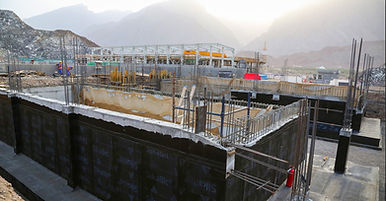
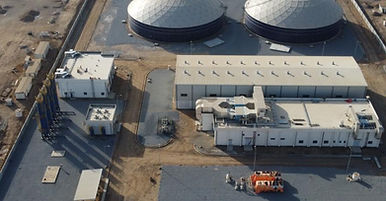
Pictures From Our Projects

CENTRAL Public drinking water supply

CENTRAL Public drinking water supply

CENTRAL Public drinking water supply

CENTRAL Public drinking water supply
CENTRAL Public drinking water supply

CENTRAL Public drinking water supply

CENTRAL Public drinking water supply

CENTRAL Public drinking water supply

CENTRAL Public drinking water supply
CENTRAL Public drinking water supply

CENTRAL Public drinking water supply

CENTRAL Public drinking water supply

CENTRAL Public drinking water supply

CENTRAL Public drinking water supply

CENTRAL Public drinking water supply

CENTRAL Public drinking water supply

CENTRAL Public drinking water supply

CENTRAL Public drinking water supply

CENTRAL Public drinking water supply

CENTRAL Public drinking water supply

CENTRAL Public drinking water supply

CENTRAL Public drinking water supply

CENTRAL Public drinking water supply

CENTRAL Public drinking water supply
"Safe Drinking Water From the Tap" – delivered through piped water and central water infrastructure - is the highest standard in drinking water supply.
But many can´t enjoy this luxury. Building and operating central water infrastructure requires massive, long-term investments.
This is where "DECENTRALIZED SOLUTIONS" come in: bringing safe drinking water to people and places where no central water supply exists.
2. Our Solution(s) and Concepts
for Decentralized Water Projects
Rural Areas & Where the luxury of expensive central water supply does not exist ...
Rural Areas - Our solution for decentralized drinking water supply - free of cost for the poor: Safe water & climate protection project concept for rural regions
Safe drinking water for the poorest, free of cost - financed through climate protection
In many rural regions of the Global South, people drink water from unsafe, often contaminated sources - because they have no alternative. Centralized, expensive infrastructures are lacking; boiling water consumes enormous amounts of firewood. Health, quality of life, forests, and biodiversity all suffer equally.
For this particular challenge, Grasshopper has developed a decentralized water climate protection project that focuses on one goal: free, safe drinking water for the poorest people in the world. This is made possible through an innovative linkage with international climate protection: the technology used for drinking water treatment replaces boiling with firewood, thereby avoiding CO₂ emissions. These savings are certified according to the water methodology of the Gold Standard, and the emission rights generated from this finance the entire drinking water project.
Water is the focus - climate protection makes it financeable. In this project, nothing is sold to poor people, and no microfinance is used that would lead to the indebtedness of the poorest. The impact is twofold - and measurable: clean water and climate protection. It is precisely this combination that makes the model so strong.
After years of concept planning and concept development, this concept has been implemented since the end of 2023 in India’s “Central Tribal Belt,” one of the structurally poorest and simultaneously most ecologically sensitive regions of the world, with approximately 10 million indigenous inhabitants and several protected tiger reserves. Over 100 villages are already being supplied. Because the service is free of charge for households, the model can be easily and broadly scaled - with the potential to reach millions of people.
Clean and safe drinking water for all - financed by protecting the climate.
An innovative project concept desigend by Grassshopper.

Decentralized Water Solutions
Pictures from our Projects


Clean and safe water is not only a public service. It’s also essential in the PRIVATE SECTOR:
Hospitals, housing societies, the mobility sector, agriculture and food processing - all depend on reliable, high-quality water. We develop and finance projects that deliver it.
3. Our Private-Sector Water Projects
Health Care / Sustainable Housing / Mobility / Agriculture& Food Processing / Industries
Clean water is also essential in many parts of the private sector – not only for drinking, but for protecting people, assets and value creation:
-
Health care: Hospitals and health-care institutions need particularly safe water to protect vulnerable patients and staff. Many operate their own on-site drinking water treatment to control this critical risk.
-
Sustainable housing: We provide water solutions for sustainable housing and climate-resilient neighbourhoods – including the development of concepts where districts can partially supply themselves, for example through rainwater harvesting and local treatment.
-
Mobility sector: Planes, airports and airlines, as well as shipping and railways, need reliable drinking water wherever large numbers of people are on the move and depend on safe water on board and in terminals.
-
Agriculture: Safe water for livestock and food processing is essential for product quality, food safety and, above all, biosecurity along the value chain.
-
Industrial users and cooling towers: Industrial sites require clean water for production processes and cooling. Proper water quality management, for example in cooling towers, helps to protect equipment, operations and health.


